Yazidi, Kurdish and Arab women clearing the mines ISIS left behind — reclaiming their land and dignity a decade after the genocide. Photographed as they see themselves, their story reached the world's press.
In northern Iraq, Yazidi, Kurdish and Arab women spend their days clearing the landmines ISIS left behind. Most of them lived through the genocide, and the land they’re making safe is their own.
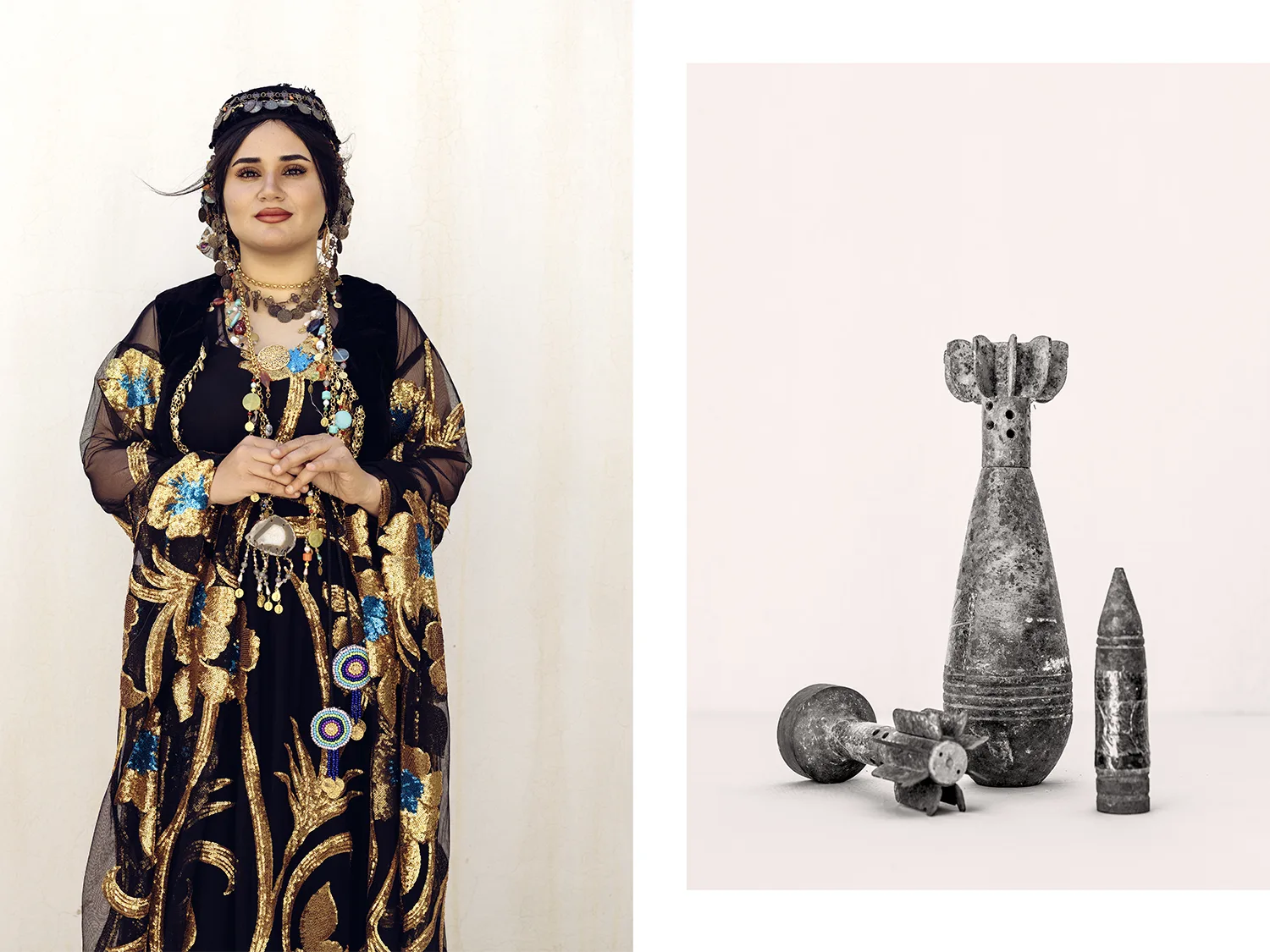
In the field they’re a figure in grey body armour. MAG went to Sane to show the rest — the woman the uniform hides. She photographed them away from the mines, in colour, as themselves, against everything the work isn’t.
The portraits became a series that reached press across the UK, Australia and the Arab world.
In the serene landscape of Dokan, four Kurdish deminers for MAG showcase their heritage through traditional dress, united by their crucial work in clearing the landmines that once threatened their communityHolya, Fahima, and Berivan, Yazidi deminers from Sinjar, stand united in traditional dress in front of the rolling hills of Duhok, near the Mines Advisory Group base in Iraq. Gathering for interviews, they commemorate the upcoming 10th genocide anniversary of their community’s struggle against ISIS.Overlooking the city of Duhok, Siham Fayruz and Rawa Ahmed, deminers from Mosul, reflect on their harrowing past and the peaceful future they’re fighting for.Avan, a MAG deminer, juxtaposed with inert munitions at the Chamchamal training base, highlighting the transition from conflict to safety.Hauras stands with quiet strength in Chamchamal’s MAG training base, her traditional attire contrasting with the remnants of conflict — a poignant reminder of the resilience and hope she embodies as a deminer.Sanaria, poised at Chamchamal’s MAG training facility, her traditional dress juxtaposed with defused munitions, is a silent testament to the peace restored by the demining efforts she contributes to.Halala, a MAG deminer, juxtaposes the beauty of Kurdish heritage with the stark reality of war, as she stands amid defused munitions at the Chamchamal training base, symbolizing her role in erasing the scars of conflict.Amidst a field that bears the scars of conflict, Avan stands as a symbol of resilience. Clad in her traditional Kurdish dress, she contrasts the harsh reality of war, represented by the munitions at her feet, with the beauty and strength of her culture and the unyielding courage required in her mission to defuse the remnants of danger.Berivan and Fahima frame Holya against a makeshift backdrop of pink fabric, a poignant contrast to the sprawling city of Duhok, Iraq, as they honour their commitment to landmine clearance 10 years after ISIS devastated their homeland in Sinjar.